I walked Shinsaibashi-suji Shopping Street at Namba, Osaka many times but this time I noticed a small banner at the end of the street advertising Yasaka Shrine with a big Lion Head’s like shape stage. Usually I don’t look at such things because of the huge amount tourist and visual noise in there but this time I came in early the morning and tourist still didn’t wake up so I could enjoy my walking this time and my brain instantly started focusing on things I didn’t see before.
It’s located at the heart of the Namba area but hidden at local residential streets
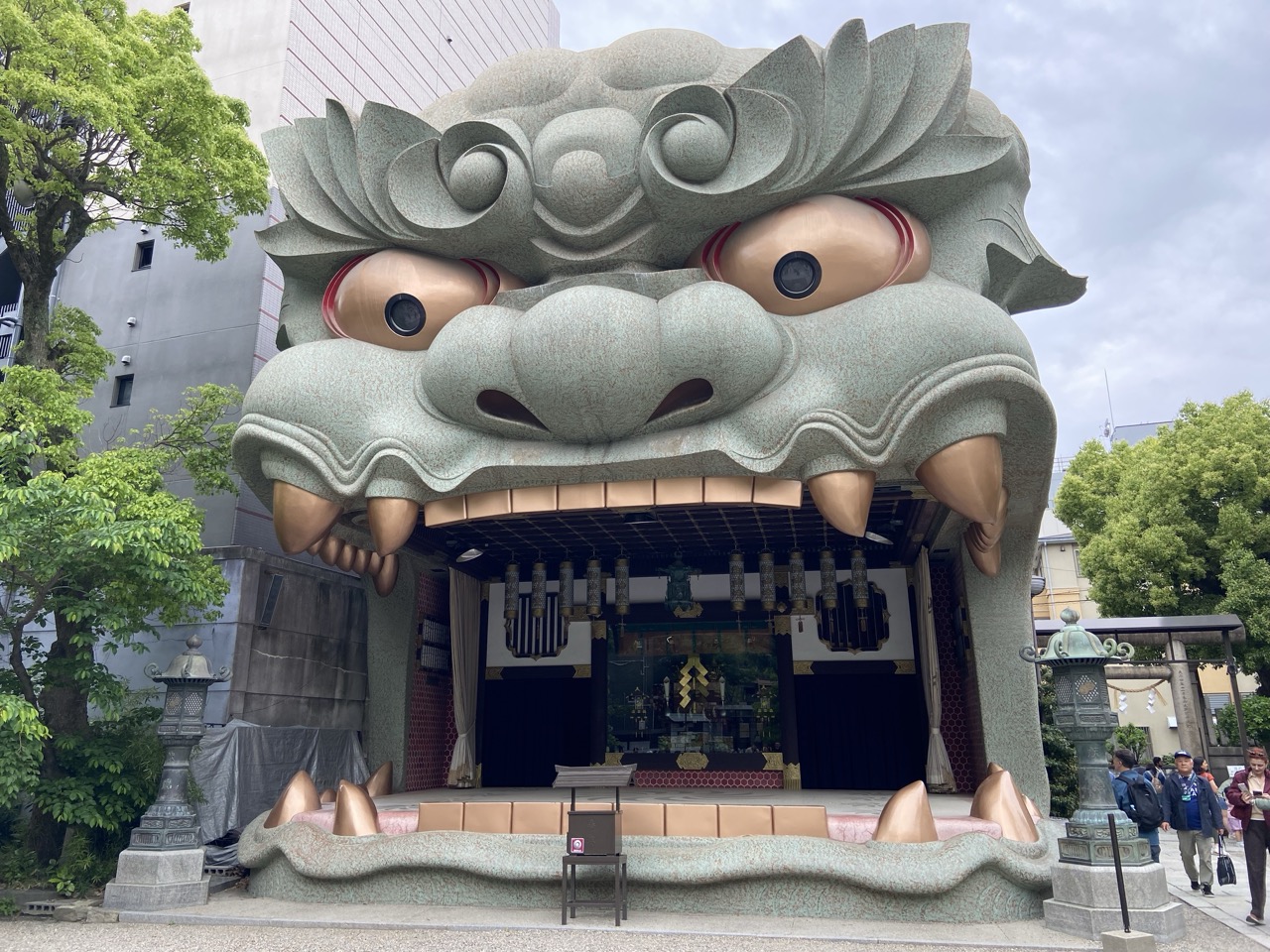
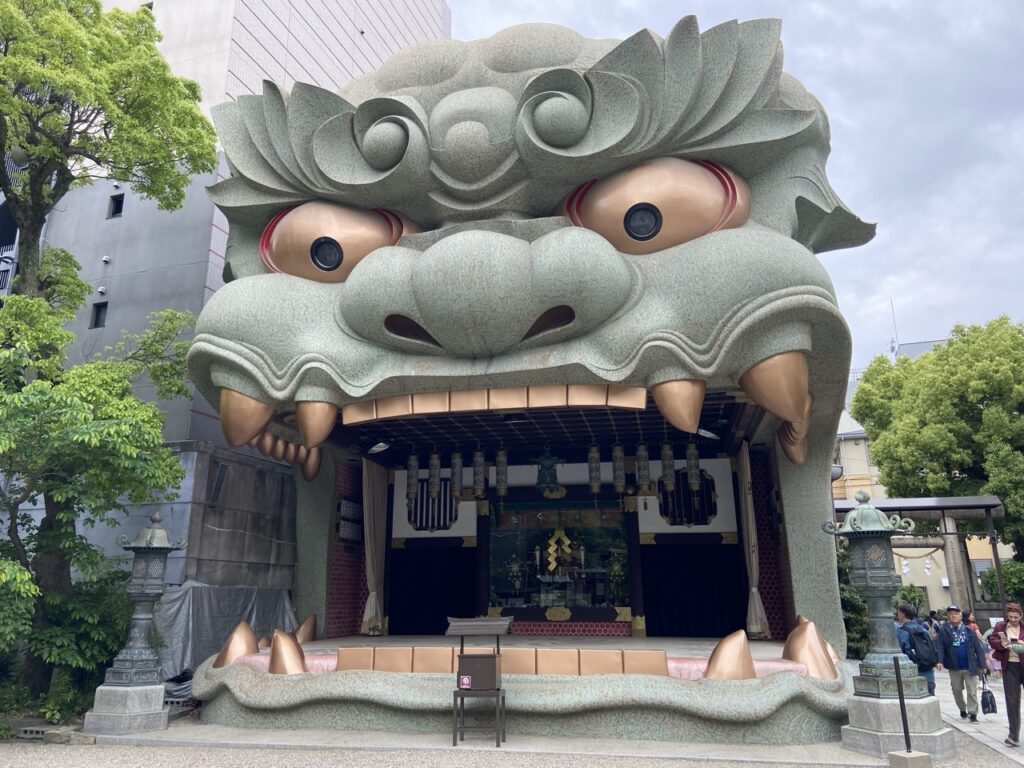
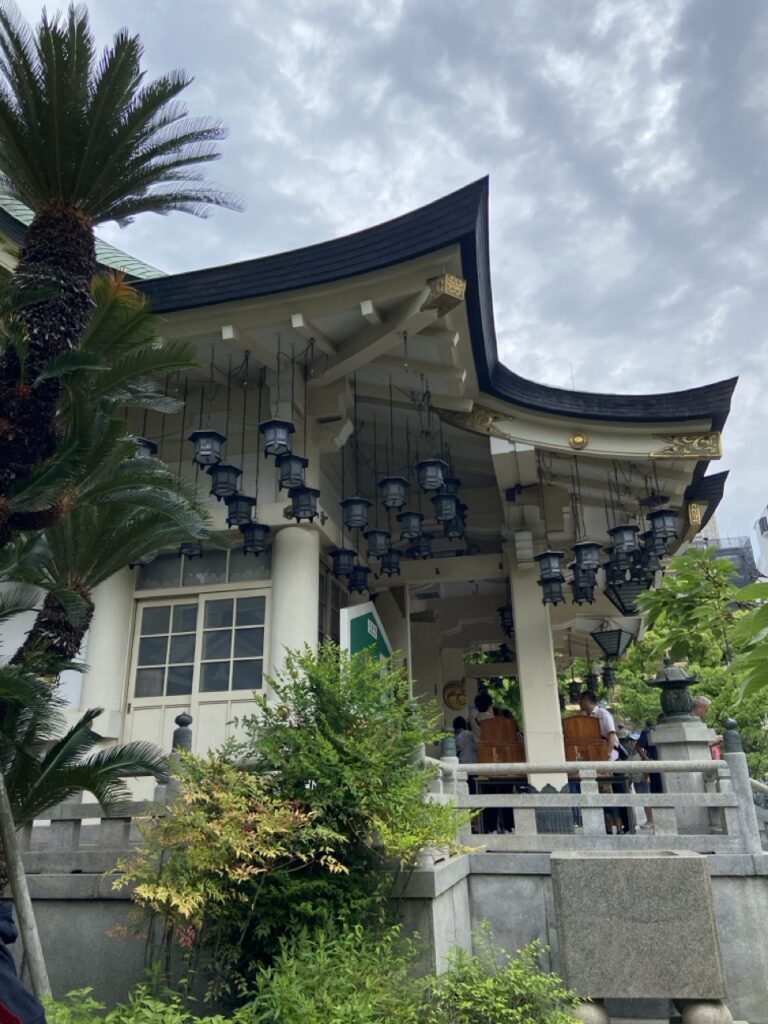
The main attraction is of course the Lion Hall. This what automatic translation of the official web site tells us about the hall.
The Shishiden (Lion Hall) is twelve meters high, seven meters deep, and seven meters wide. It was completed in May 1974, along with the completion of the main hall.
The hall is made of steel frame and reinforced concrete, with some wood construction inside. The exterior is finished with copper powder spray and synthetic resin. Inside the shrine, a pair of Kaga lions are enshrined on a chest, housing the fierce spirit of the enshrined deity, Susanoo-no-Mikoto. The lions’ 24 teeth and the area around their eyes are made of brass. The phoenix carvings embedded in the latticed ceiling are all hand-carved, and each has a different design. The eyes also function as lights, and the noses as speakers.
On the stage, various performing arts are offered, such as Kagura (Shinto music and dance) and Iaido (Japanese sword drawing) during the New Year, and lion dances and folk dances during the summer festival. The enshrined deity, Susanoo-no-Mikoto, is also the god who composed the first waka poem in Japan.
In recent years, it has become a popular destination for worshippers from all over Japan, who pray for academic success, job hunting, entrance exams, or company development, believing that its large mouth brings victory, swallows evil spirits, and invites good fortune (business success).
At the end of 2008, thanks to donations from local philanthropists, the interior and exterior were renovated, restoring the splendor it had at the time of its construction.
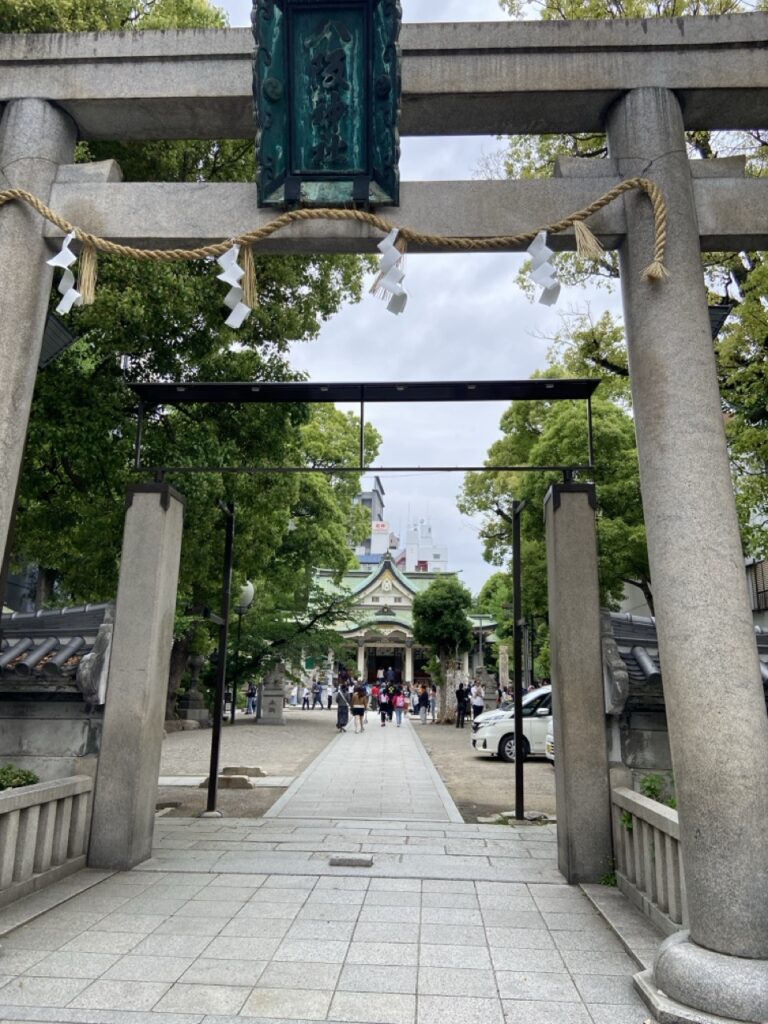
This is what you see once you’ve entered from the main gate
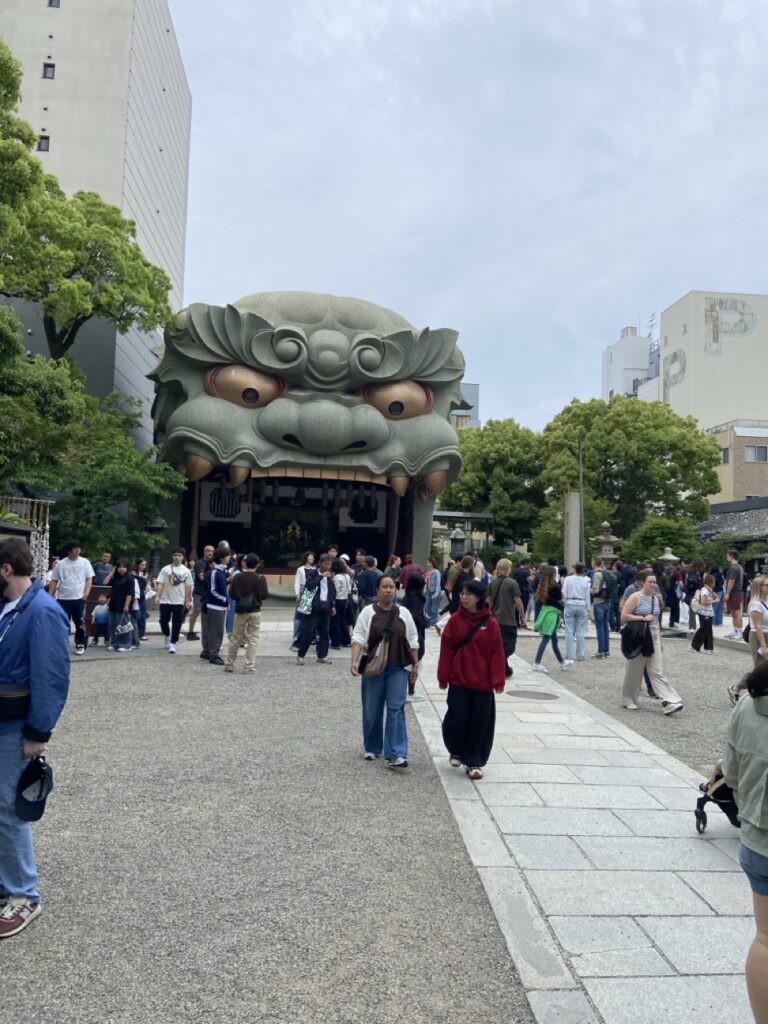
The Lion Hall
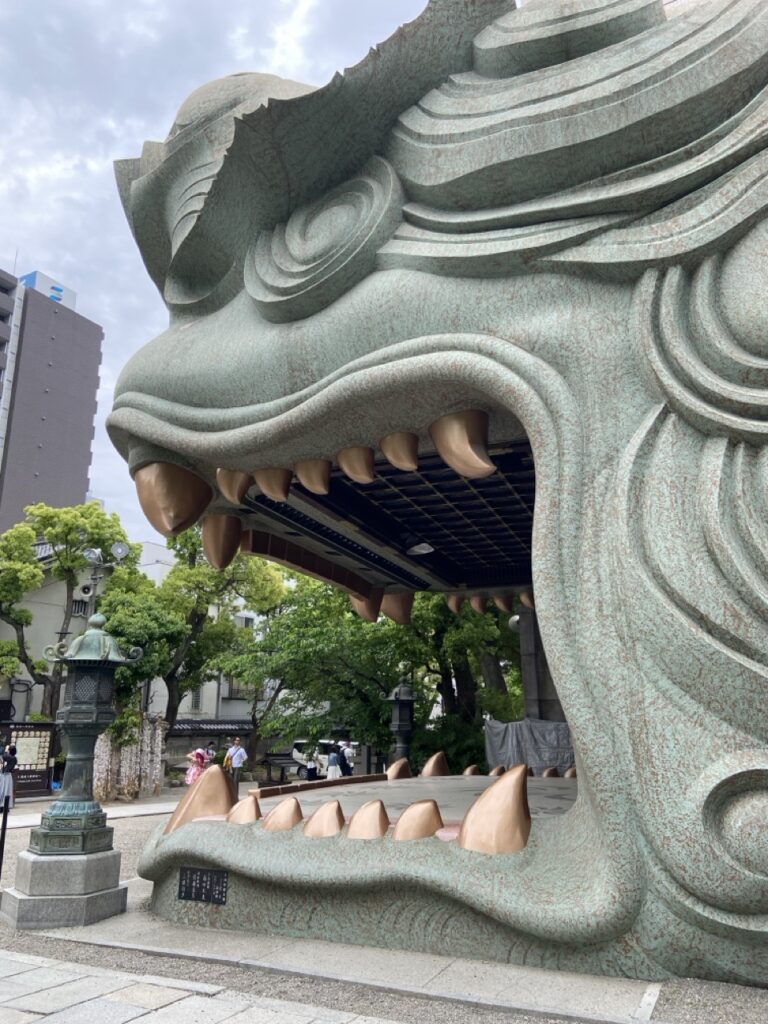
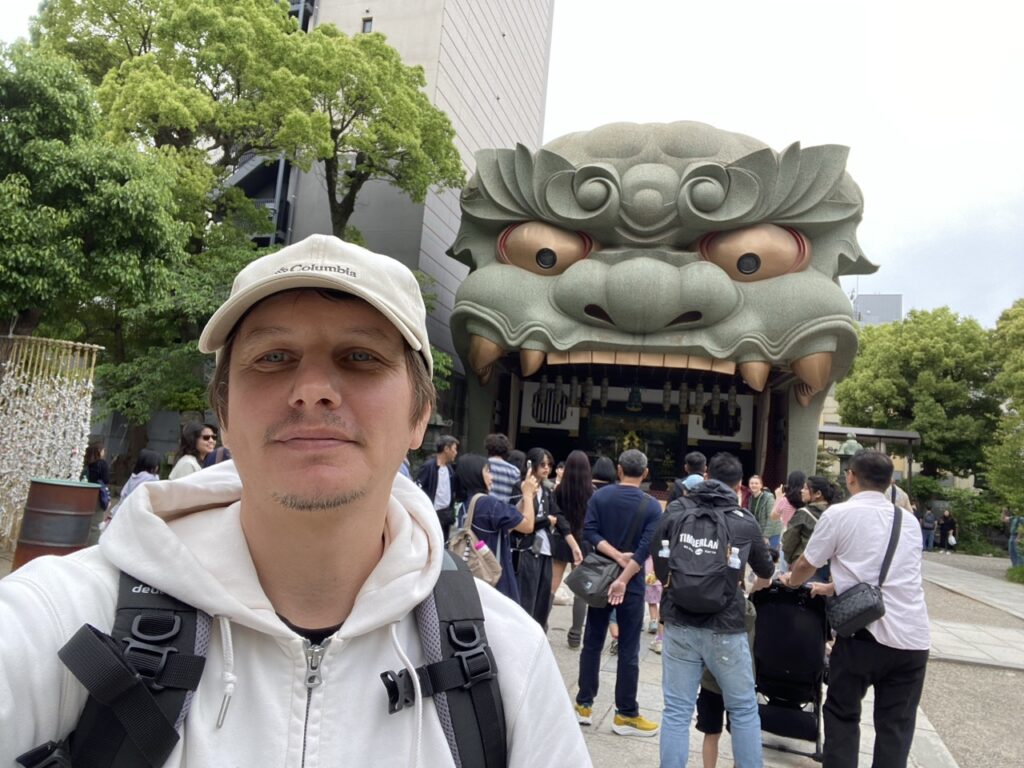
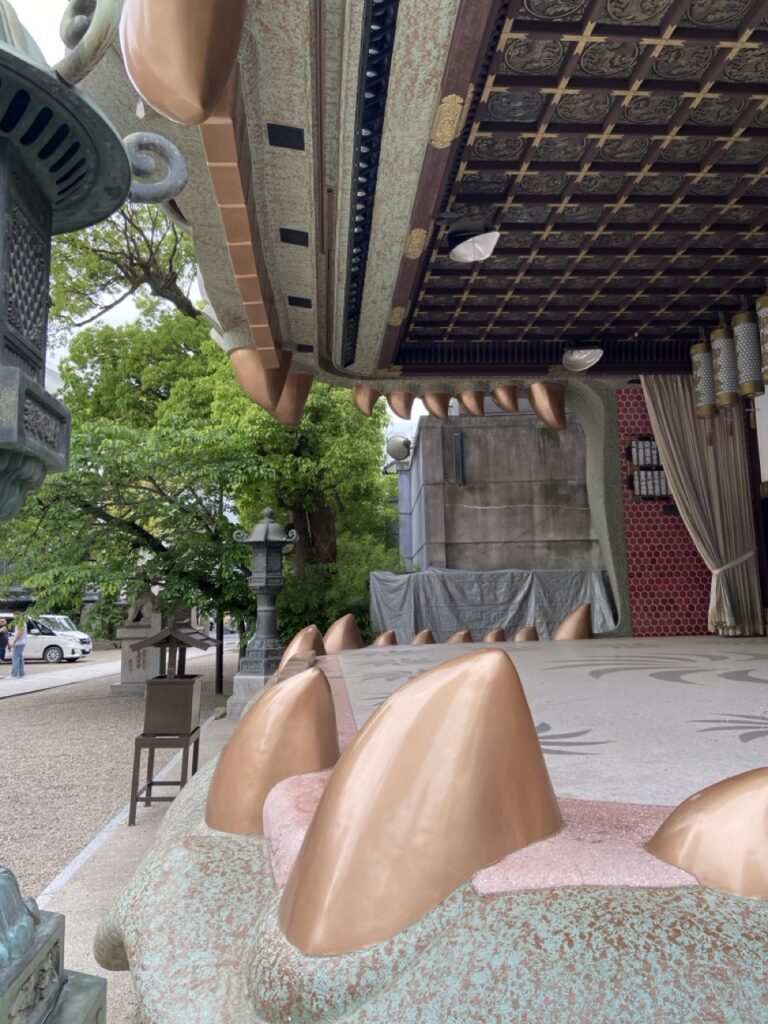
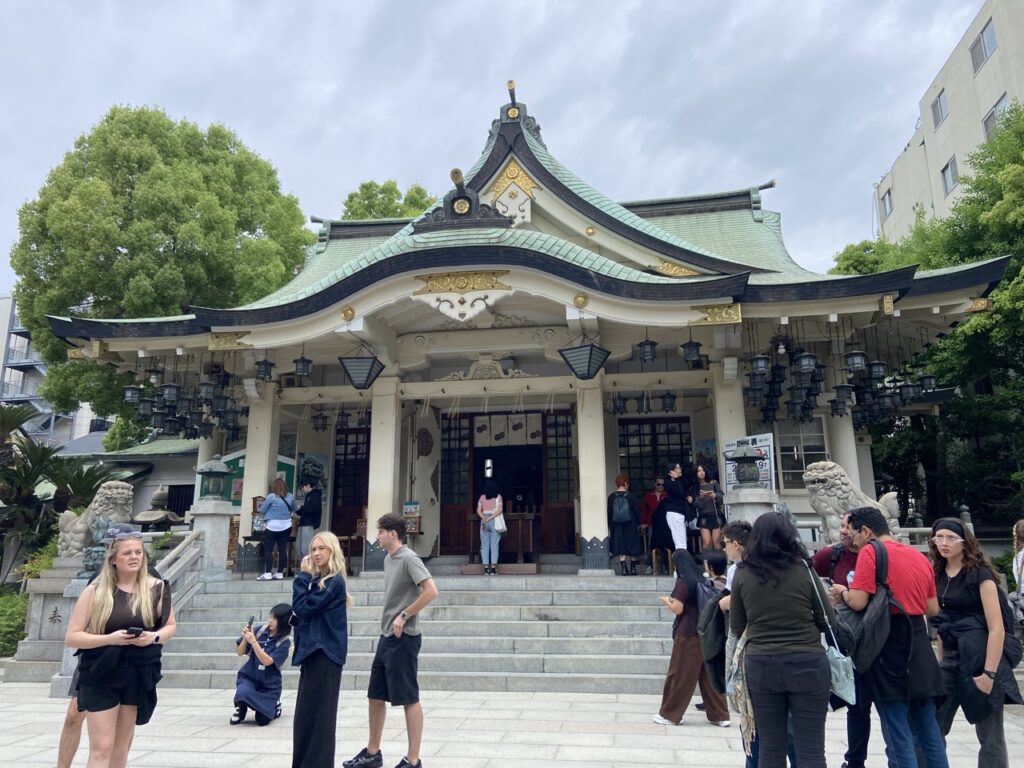
The main shrine front and side views
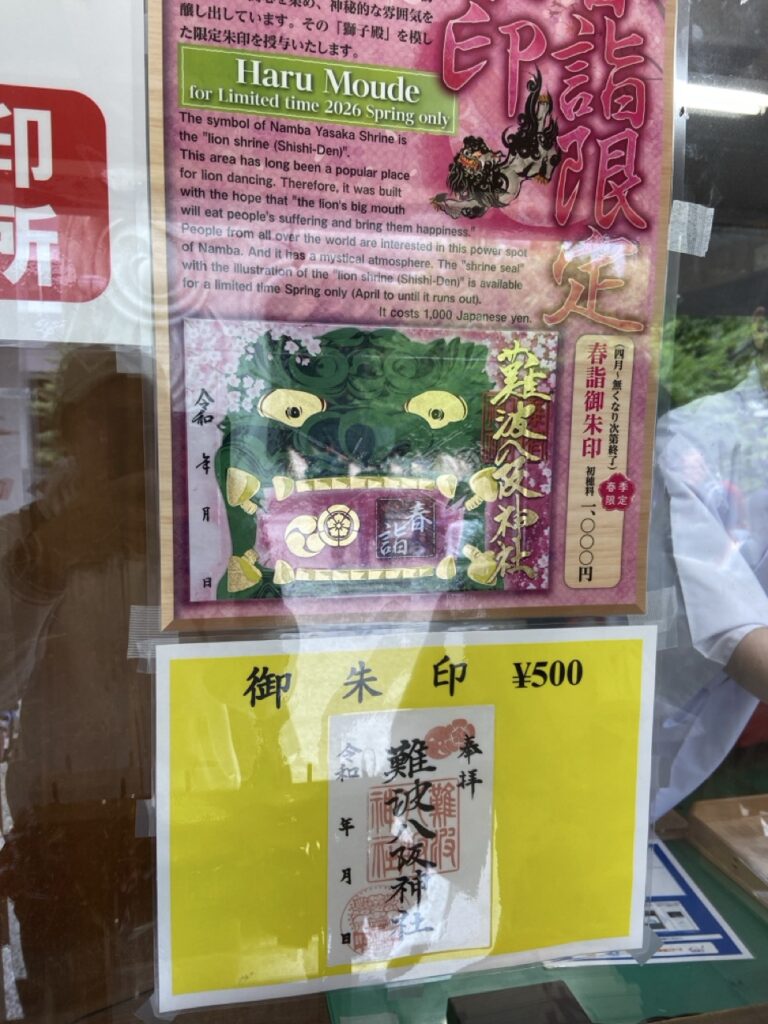
A souvenir shop providing apart from standard souvenirs the “shrine seal” with the illustration of the “lion shrine (Shishi-Den)” is available for a limited time Spring only (April to until it runs out).
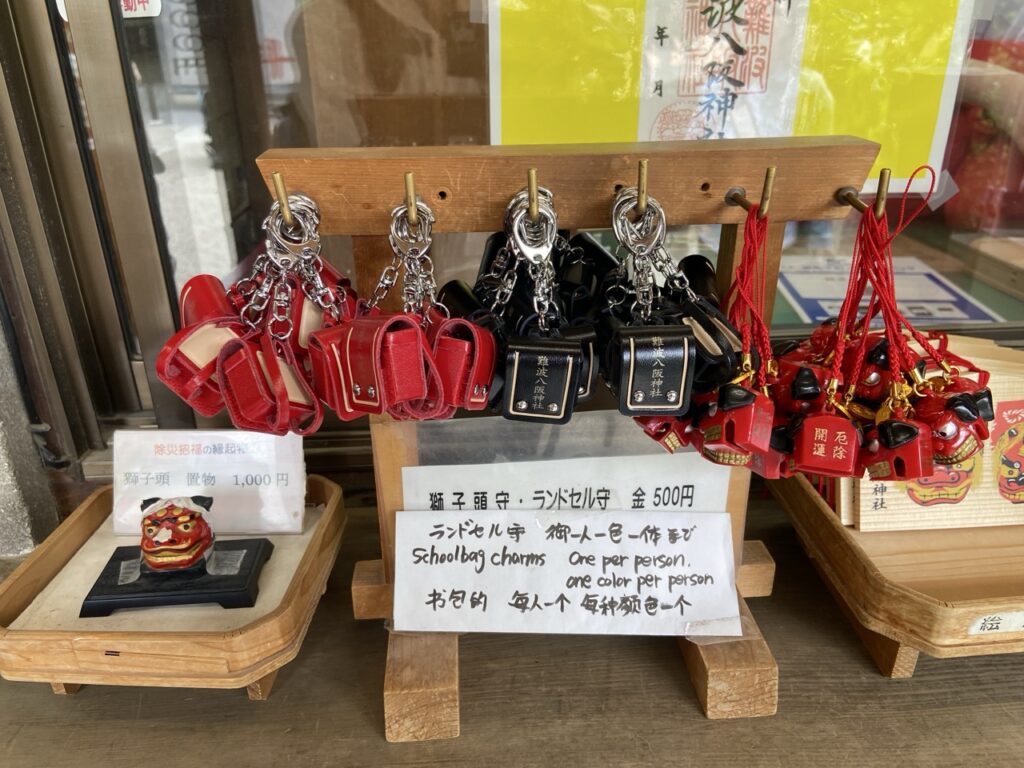
Wishes area


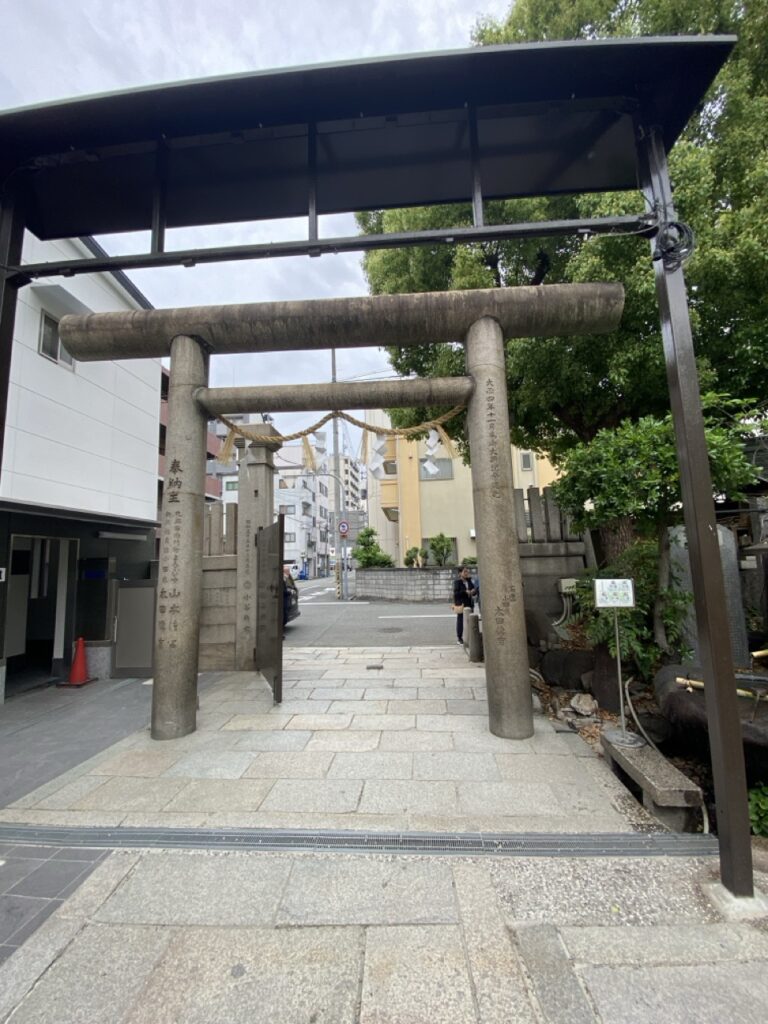
Side entrances
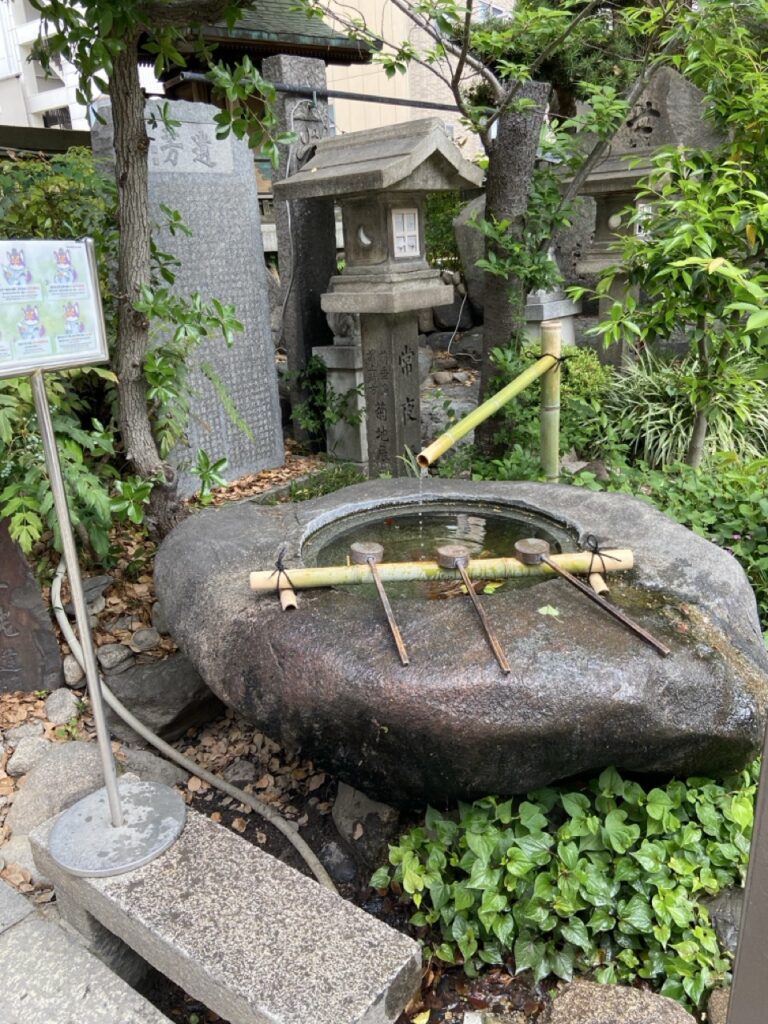
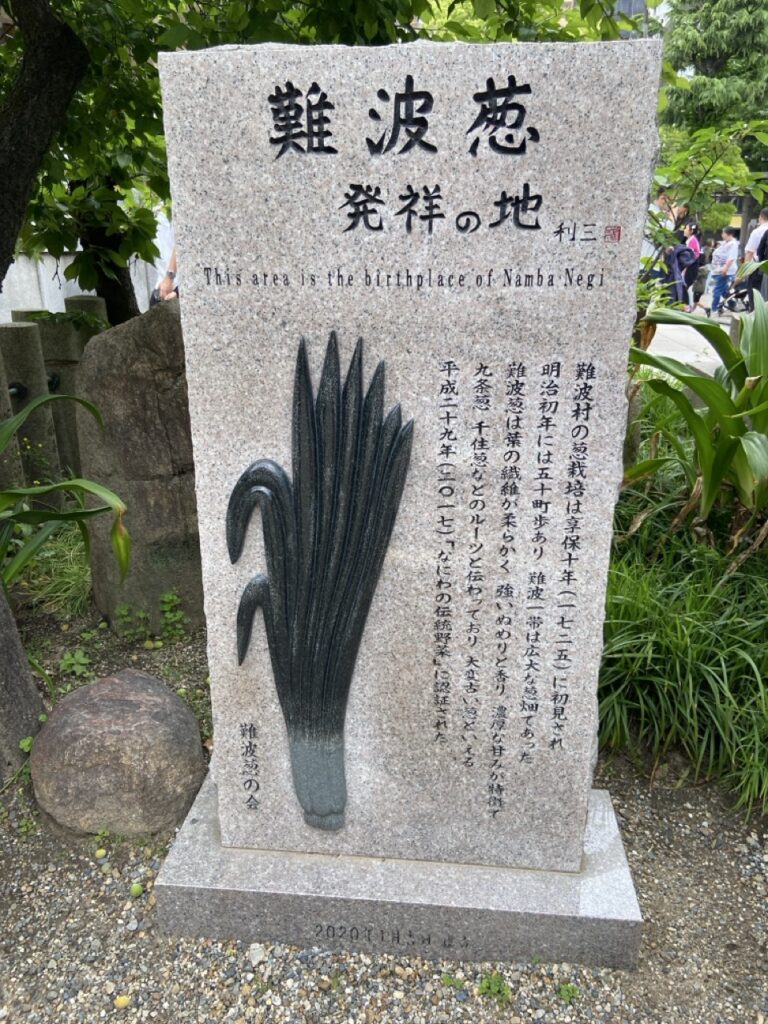
Namba Negi
Namba Negi is a traditional Osaka green onion (Naniwa no Dento Yasai) known for its high sweetness (sometimes surpassing tomatoes in summer), strong aroma, and slimy texture. Originating in the Namba area, it is considered a root of Japanese green onions, revived by farmers in Matsubara City.
A statue of a horse and side temples


Though already discovered by big crowds but still pretty much impressive encounter with a mix of the Osaka’s bizarre style of 70-80s and a traditional Shinto.
Adios Amigos and until the next one,
VR